

Tramadol vs Hydrocodone – What is the Difference?
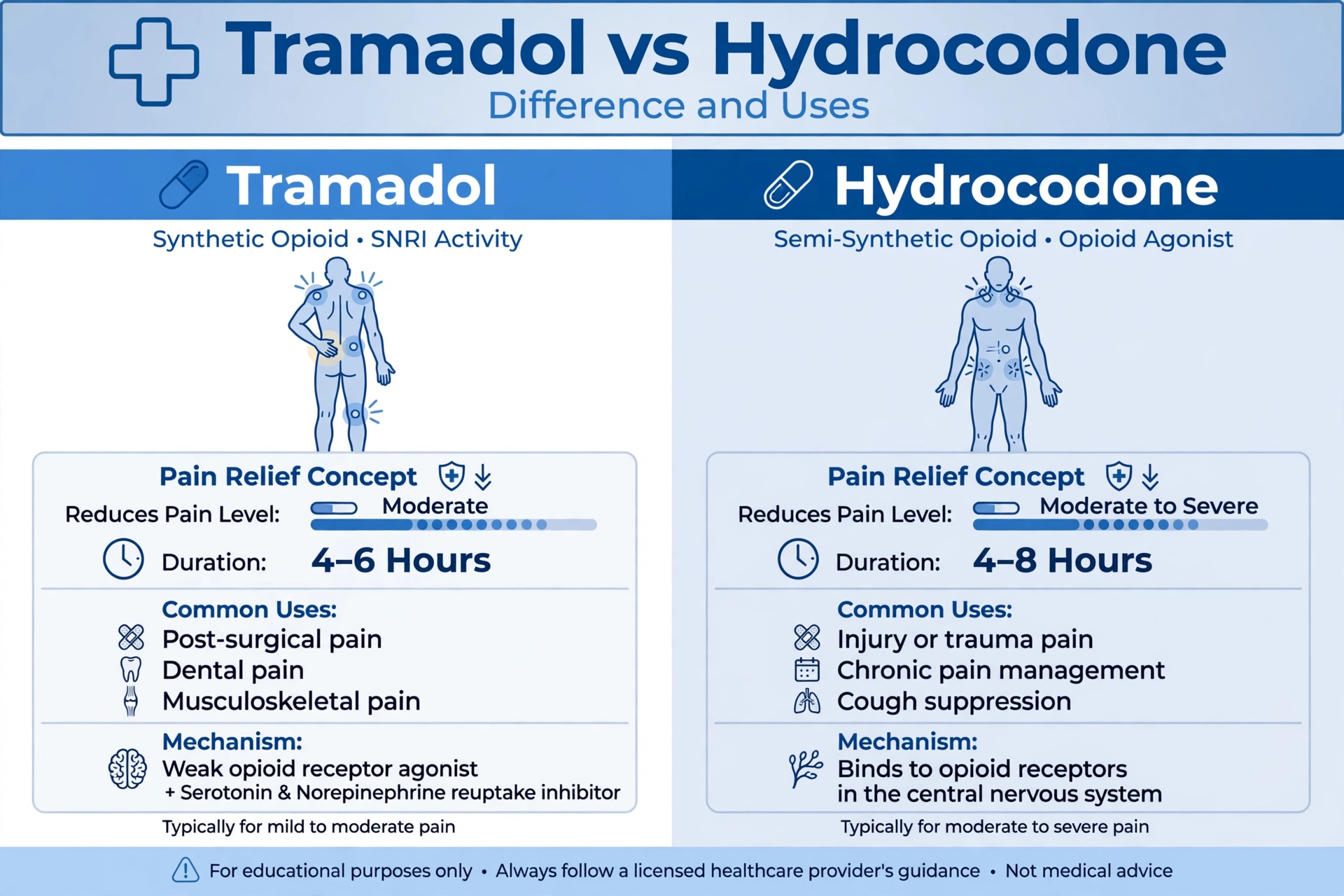
Tramadol vs Hydrocodone both are powerful prescription pain relievers called opioid analgesics. If you are suffering from moderate to severe pain, your doctor may prescribe one of these. While both treat pain, they are very different in strength, uses, and risk.
What is Tramadol?
Tramadol is a synthetic opioid analgesic used to treat moderate to moderately severe pain. It works by changing how your brain senses pain.
Tramadol also increases the effects of serotonin and norepinephrine in your brain, which helps block pain signals. Common brand names include Ultram, ConZip, and Qdolo. It is considered less potent than hydrocodone and is classified as a Schedule IV drug in the USA, meaning lower abuse potential.
What is Hydrocodone?
Hydrocodone is a semi-synthetic opioid made from natural compounds of the opium poppy. It is a much stronger pain reliever than tramadol and is used for severe pain when weaker opioids don’t work.
It works directly on mu-opioid receptors in the brain to block pain and also causes feelings of euphoria. Common brands include Vicodin, Norco (with acetaminophen), and Zohydro ER. It is a Schedule II controlled substance due to high abuse potential.
Tramadol vs Hydrocodone – Key Differences
- Potency: Hydrocodone is much stronger. A 30mg dose of hydrocodone is equal to 30mg of morphine, while you need 300mg of tramadol to get the same effect.
- Drug Schedule: Tramadol is Schedule IV (lower risk), Hydrocodone is Schedule II (higher risk of misuse and addiction).
- Mechanism of Action: Tramadol has a dual action – weak opioid agonist + serotonin/norepinephrine reuptake inhibitor. Hydrocodone is a direct and strong opioid agonist.
- Uses: Tramadol is for moderate to moderately severe pain, like post-surgery or injury. Hydrocodone is for severe, chronic pain and also for severe cough suppression.
- Onset and Duration: Hydrocodone starts in 20-30 minutes, half-life 3.8 hours. Tramadol starts in 30-60 minutes, half-life 5-6 hours.
- Side Effects: Both can cause nausea, constipation, dizziness, sedation. Hydrocodone has a higher risk of respiratory depression. Tramadol has a higher risk of seizures and serotonin syndrome.
Which is Better for Pain?
Neither is universally better. For moderate pain, doctors prefer tramadol first because it is weaker and safer. For severe pain after major surgery or cancer pain, hydrocodone is more effective. Your doctor will decide based on your pain severity and medical history. For more information on pain treatments, you can visit our guide.
Can You Take Tramadol and Hydrocodone Together?
No, you should never take tramadol and hydrocodone together unless your doctor specifically tells you to. Combining two opioids can lead to severe respiratory depression, overdose, coma, and death. Always consult your doctor.
Conclusion
In summary, hydrocodone is stronger and riskier than tramadol. Tramadol is suitable for moderate pain with lower abuse potential, while hydrocodone is reserved for severe pain. Both require a prescription and must be taken exactly as prescribed.
If you are looking for more information about safe pain management, check out MedX Pharmacy USA.